




The Rich Flavors of Moroccan Jewish Cuisine.
Food holds a profoundly significant place within the vibrant tapestry of Moroccan Jewish culture, much like it does for communities across the globe. Yet, Moroccan Jewish cuisine is a unique and compelling story of adaptation and fusion. It masterfully intertwines the strict dietary laws and deeply held norms of Jewish tradition, known as kashrut, with the rich and diverse culinary landscape of the various regions within Morocco where Jewish communities historically thrived. Each local cuisine style across Morocco boasts its own distinct character, a reflection of the confluence of peoples, cultures, and historical influences that have shaped the land over centuries. This inherent regional diversity within Morocco itself contributes to the fascinating variations found within Moroccan Jewish cooking.

The role of food in Moroccan Jewish culture is undeniably central, serving as a cornerstone of community, celebration, and daily life
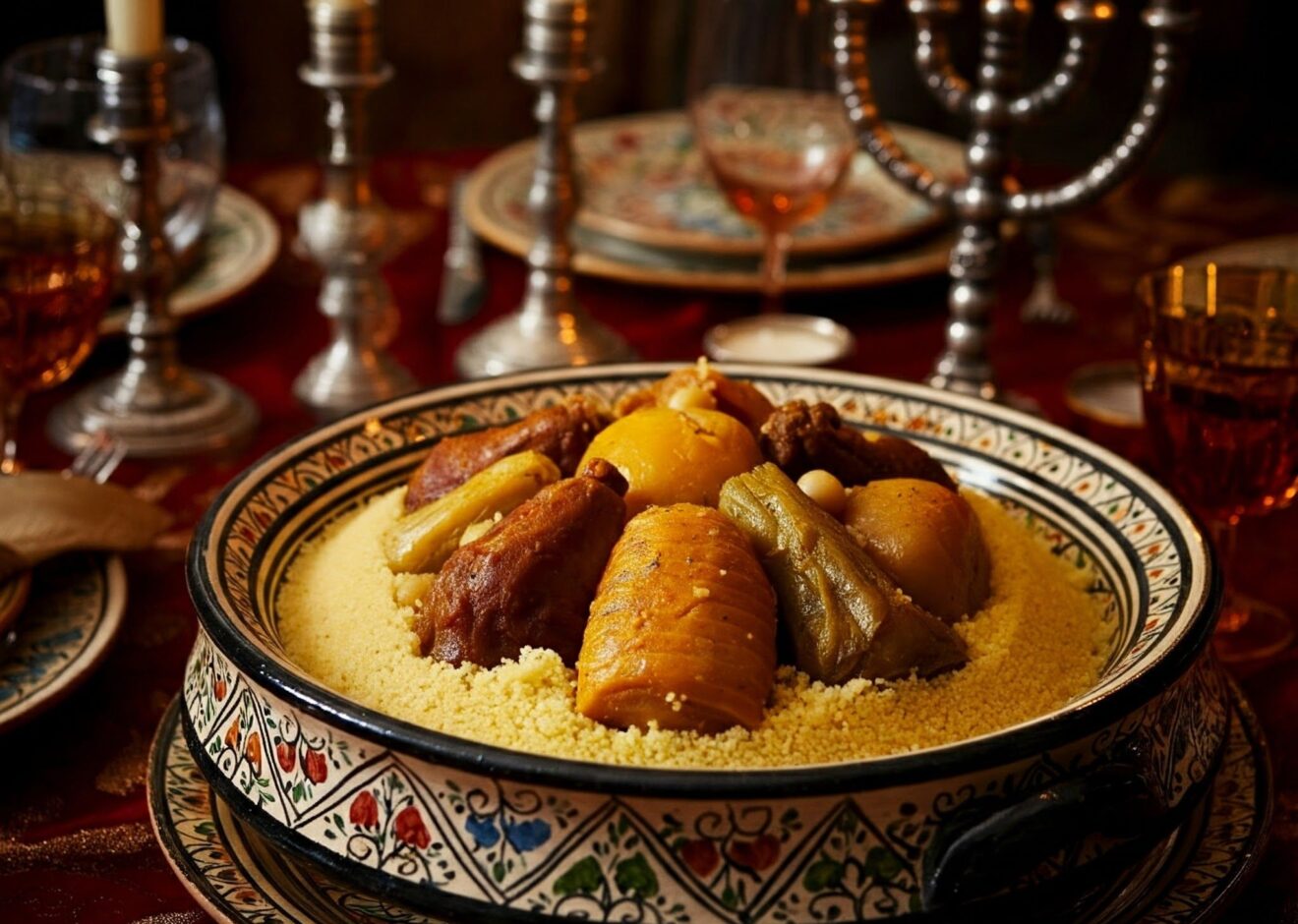
The ingredients that form the heart of Moroccan Jewish cuisine are a testament to the bounty of the Moroccan land. The cuisine generously utilizes the country’s abundant harvest of fresh fruits and vegetables, along with succulent mutton and lamb, the earthy richness of almonds and walnuts, the briny intensity of olives, and the precious liquid gold of olive and argan oil. The flavor profiles are a symphony of aromatic spices and potent condiments, frequently incorporating the warmth of cinnamon, the earthiness of cumin, the complex blend of ras el hanout (a prized mixture of various spices), the sharp bite of ginger, the golden hue of saffron, the vibrant color of paprika, the pungent aroma of garlic, the tangy zest of preserved lemon, and the salty depth of preserved olives. A distinctive characteristic of this cuisine is the frequent pairing of meat dishes with fruit, creating a delightful balance of sweet and savory. Furthermore, Moroccan Jews, sharing a culinary inclination with their Muslim counterparts, often include organ meats in their dishes, showcasing a nose-to-tail approach to cooking. The iconic national dish, couscous, appears in numerous variations, typically served alongside tender vegetables, caramelized onions, and flavorful meat. Many meals are thoughtfully complemented by an array of cooked salads, offering a refreshing contrast to the richer main courses. The conclusion of a meal is often a celebration of sweetness, featuring fresh fruit and delicate pastries, frequently filled with a rich almond paste.
Adherence to the principles of kashrut is a non-negotiable aspect of Moroccan Jewish food preparation. This strict observance dictates that milk and meat products are never combined in the same dish. As a result, butter is eschewed in favor of oils, with olive oil holding a particularly prominent place in the kitchen. Furthermore, the consumption of shellfish, such as crabs and shrimp, and pork is strictly prohibited, reflecting the broader dietary laws of Judaism.
Moroccan Jews have ingeniously adapted traditional Moroccan dishes to the specific requirements of Jewish holidays and life cycle events
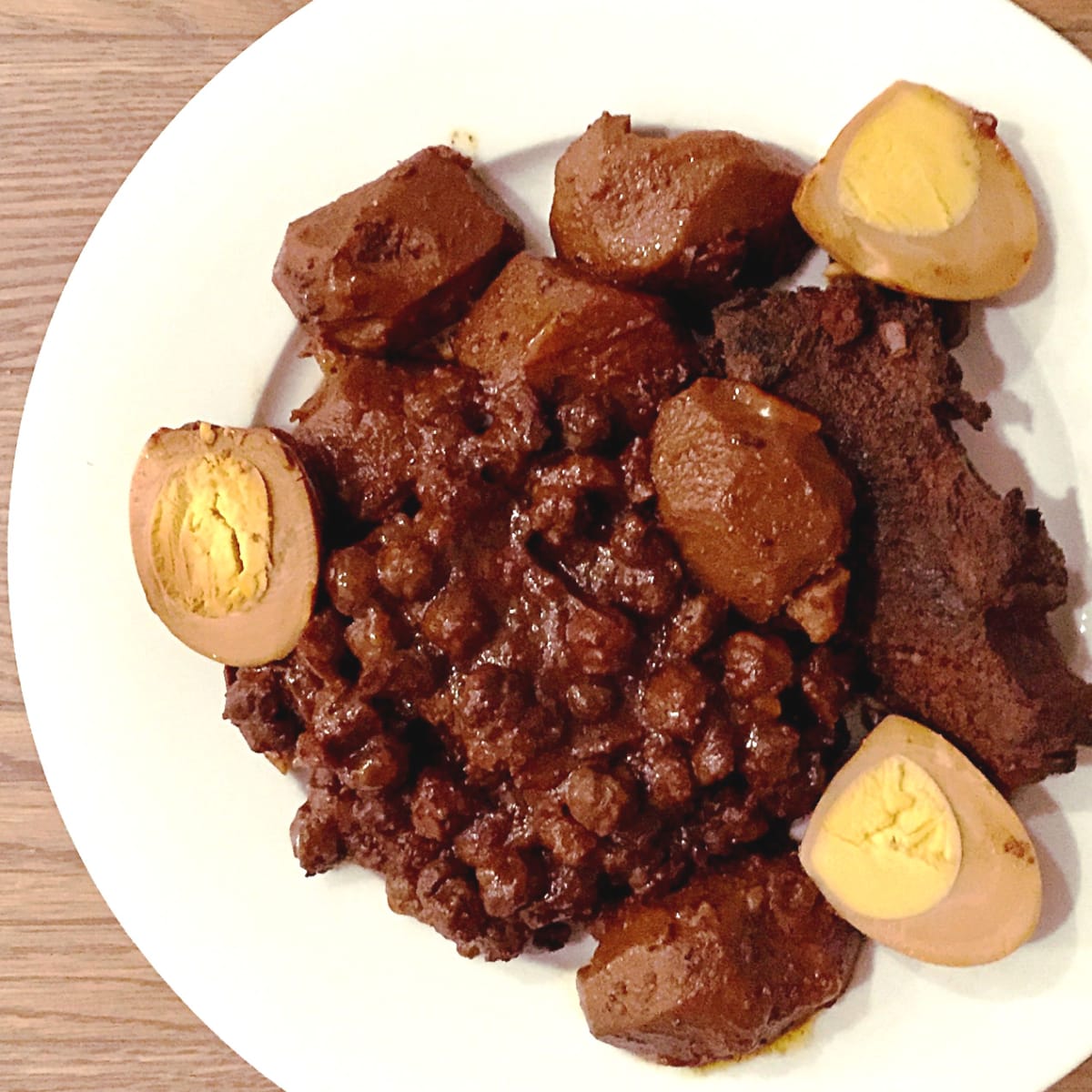
Moroccan Jews have skillfully adapted their culinary traditions to align with the rhythms of the Jewish calendar, creating special dishes for holidays and life cycle events. The observance of Shabbat, the Sabbath, presents a unique culinary challenge, as the lighting of fire is prohibited from sundown on Friday until sundown on Saturday. To circumvent this restriction while still enjoying a warm and nourishing meal, they prepare a special slow-cooked stew known as “Skina” or “Dafina.” This hearty dish is traditionally cooked at a very low temperature from Friday afternoon until Saturday at noon. While each cook possesses her own cherished recipe, the core ingredients of Skhina typically include tender meat, comforting potatoes, sweet potatoes, rice, chickpeas, and eggs. It can be further enhanced with savory or sweet stuffing variations and a flavorful chickpea soup. The Shabbat lunch itself is a ritualistic experience, commencing with a blessing over wine and freshly baked homemade bread. To conclude the meal, Moroccan Jews sometimes partake in mahia, a potent eau de vie distilled from figs, dates, or grapes, offering a warm and convivial end to the Sabbath meal.
One morning, when Gregor Samsa woke from troubled dreams, he found himself transformed in his bed into a horrible vermin. He lay on his armour-like back, and if he lifted his head a little he could see his brown belly, slightly domed and divided by arches into stiff sections. The bedding was hardly able to cover it and seemed ready to slide off any moment. His many legs, pitifully thin compared with the size of the rest of him, waved about helplessly as he looked. “What’s happened to me? ” he thought. It wasn’t a dream.
Other Jewish holidays also call for their own distinct culinary expressions. Rosh Hashanah, the Jewish New Year, is marked by meals that symbolize hopes for a sweet and abundant year. These typically include the symbolic pairing of apples dipped in honey, a selection of seven different vegetables, a sheep’s head (representing leadership), pomegranates and other seasonal fruits, and young green dates. The conclusion of the solemn Yom Kippur fast is celebrated with a rich and restorative meal. This often features a special holiday bread enriched with almonds, a substantial main course, and an abundance of delectable cakes and pastries crafted from almond paste, providing a welcome replenishment after the fast. For the holiday of Succoth, which commemorates the Israelites’ journey in the wilderness, Moroccan Jews construct temporary huts, known as succot, decorated with the bounty of the harvest. Meals enjoyed within these temporary dwellings often include hearty couscous and comforting bean soup. Hanukkah, the Festival of Lights, is synonymous with foods cooked in oil, symbolizing the miracle of the oil that lasted eight days. The special treats for this holiday are typically beignets or sfenj, delicious fried doughnuts.
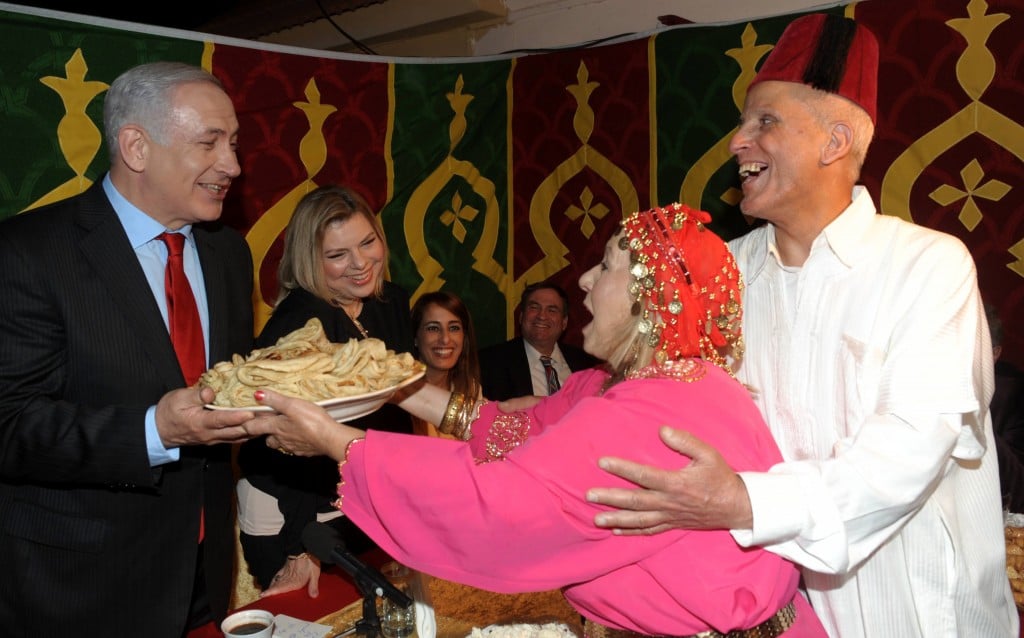
A uniquely Moroccan Jewish holiday, Mimouna, marks the joyous conclusion of the Passover festival. This celebration, which takes place immediately after Passover ends, is characterized by warmth, hospitality, and a spirit of unity. It is common for Muslim friends and colleagues to visit Jewish homes, bringing gifts of bread and pastry products, symbolizing the return to consuming leavened goods after the Passover restrictions. Jewish families prepare elaborate tables laden with foods and symbolic items that represent the end of Passover and usher in a year of prosperity. These items often include milk, whey, butter, honey, a variety of fruits, flowers, branches from a fig tree, wheat kernels, a whole fish (symbolizing fertility), and five beans placed atop a pile of flour. The culinary centerpiece of the Mimouna celebration is the mofleta, a special thin pancake.
The rich heritage of Moroccan Jewish cuisine is further preserved and shared through dedicated cookbooks. While some of these valuable resources are currently out of print, they offer invaluable insights into traditional recipes and techniques. Notably, “Moroccan Jewish Cookery” by Viviane and Nina Moryoussef is a particularly well-regarded publication. More recent additions to the culinary literature include “I Thought I’d Never Taste This Again: Cuisine of Sephardic Morocco” by Mercedes Castiel and “Grandma Elmaleh’s Moroccan Cookbook” by Lisa Elmaleh Craig, which offer contemporary perspectives on this timeless cuisine. For those who are fluent in French, “Cuisine Juive Marocaine” by Rosa Amar provides another excellent resource for exploring the depths of this fascinating culinary tradition.